
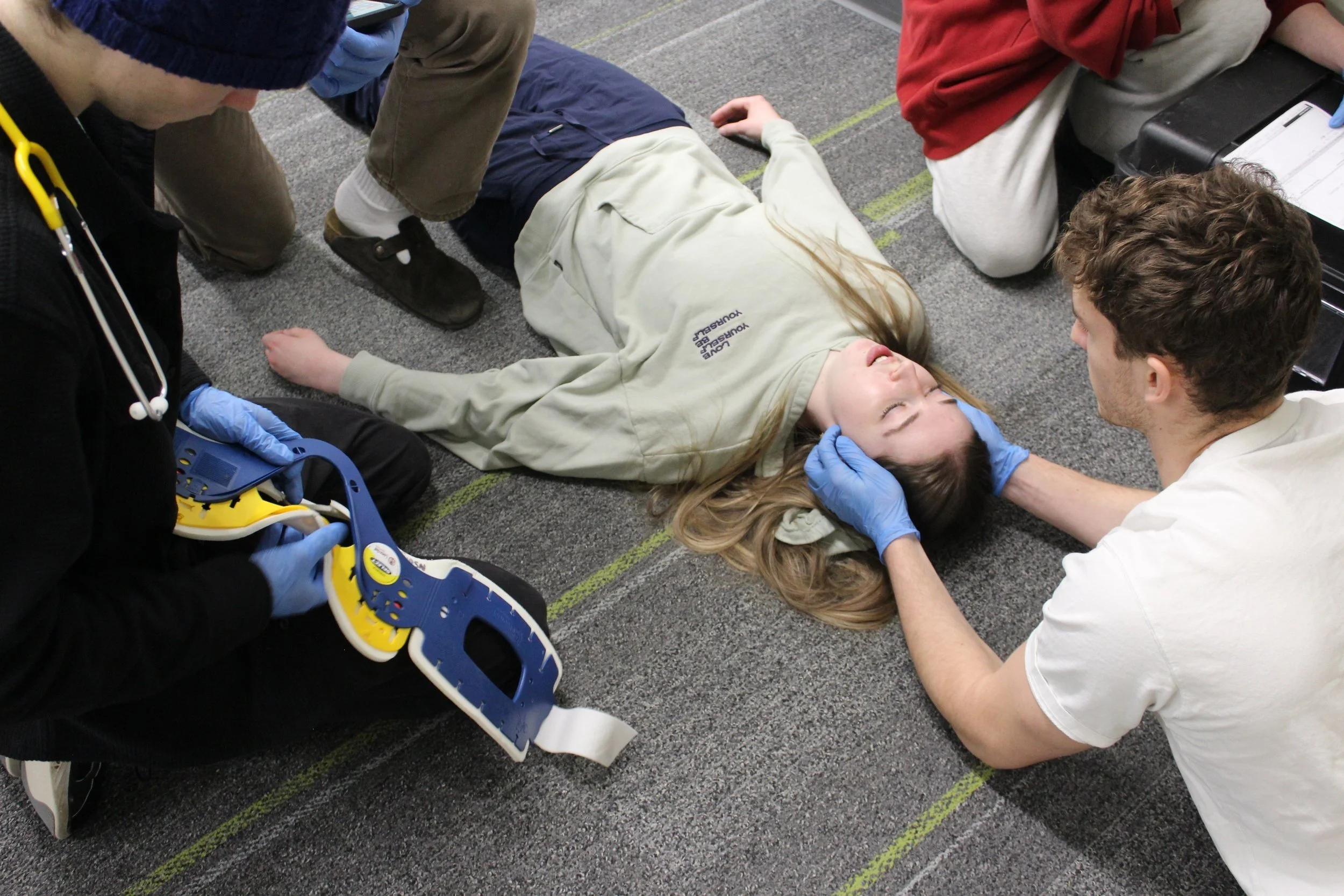
Patient Volunteer Program
The DMCRT Patient Volunteer Program (PVP) is designed to support DMCRT training sessions and DMCRT responder skill development by providing realistic scenarios. Patient Volunteers participate in our training sessions by acting out pre-planned medical symptoms, providing a verbal medical history, and allowing DMCRT’s Volunteer Medical Responders (VMRs) to perform non-invasive assessments and check vital signs.
Please note that participation in the PVP is a separate volunteer role and not a direct pathway to joining the DMCRT as a Volunteer Medical Responder.
The application process for our Patient Volunteer Program closes Friday September 25th, 2026 at 11:59pm.
Patient Volunteer FAQ’s
-
No. Patient Volunteers participate in simulated training scenarios only. Participation in the program does not qualify you to provide first aid or medical care in real-world situations, and the DMCRT is not liable for your actions taken outside of training activities. You will not receive any certifications from the DMCRT by participating in the Patient Volunteer Program.
-
You are expected to volunteer for at least one training session per semester. Our trainings are usually on Sunday evenings and you would be needed for approximately 1.5 hours.
-
Patient Volunteers participate in pre-planned medical and mental health scenarios during weekly DMCRT trainings. This may include acting out symptoms, providing a scripted medical history, and allowing responders to perform non-invasive assessments such as taking vital signs.
-
No prior medical experience is required. The Patient Volunteer Program is designed for individuals who are interested in supporting responder training by participating in realistic scenarios as patient actors.
-
Yes. If you are uncomfortable with a scenario, you can notify the Patient Volunteer Coordinators before training or withdraw during the session. This will not affect your standing in the program.
-
Responders may perform non-invasive assessments such as checking pulse, blood pressure, breathing rate, or other basic vital signs as part of training scenarios.
-
No. Volunteers are asked to follow the provided scenario exactly and should not share personal medical information or seek medical advice during trainings.
-
Yes. Attendance is tracked by the Patient Volunteer Coordinators, and volunteer hours can be verified for applications or other purposes upon request.
-
You can contact the Patient Volunteer Coordinators at patientvolunteers@dmcrt.ca